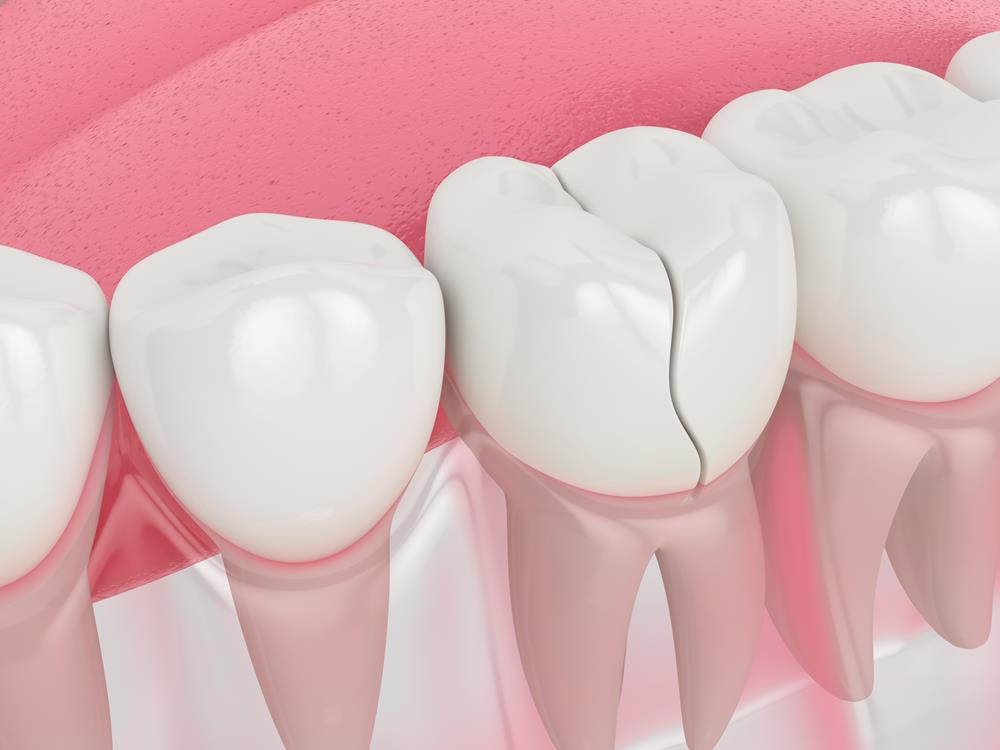
Cracked Tooth Repair in Arlington, MA
A cracked tooth can cause significant pain and, if left untreated, can lead to infection and tooth loss. At Dental Pro, our experienced team uses advanced diagnostic technology and proven treatment techniques to evaluate and repair cracked teeth — relieving your discomfort and protecting your smile before the damage progresses. Call us at (617) 607-2083 or contact us online to schedule your appointment today.
Signs and Symptoms of a Cracked Tooth
A cracked tooth can be surprisingly difficult to diagnose — even with X-rays — because many cracks are too fine to appear on standard imaging. The pain associated with a cracked tooth often comes and goes, which can make it easy to dismiss or attribute to another cause. At Dental Pro, our team uses advanced digital X-rays, intraoral camera imaging, and thorough clinical examination to accurately identify cracks and assess their severity.
Common signs that you may have a cracked tooth include sharp pain when biting down that disappears quickly when pressure is released, sensitivity to hot, cold, or sweet foods and beverages that lingers longer than expected, intermittent pain that is difficult to pinpoint to a specific tooth, swelling or tenderness in the gum tissue around a tooth, and discomfort when chewing that seems to shift depending on how you bite. If you are experiencing any of these symptoms in Arlington, MA , do not wait — call Dental Pro at (617) 607-2083 for a prompt evaluation. The sooner a cracked tooth is assessed and treated, the more treatment options are available and the better the outcome.
Why Cracked Teeth Need Prompt Treatment
When a tooth is cracked, the flexing motion of the crack during chewing causes the pieces of the tooth to move slightly with each bite — irritating the soft pulp tissue at the center of the tooth that contains the nerves and blood supply. When biting pressure is released, the crack closes rapidly, which is what causes the sharp, sudden pain many patients describe. Over time, this repeated irritation damages the pulp progressively.
If a cracked tooth is left untreated, the damage to the pulp will eventually become irreversible — causing the tooth to hurt constantly, even when you are not eating or drinking. At this stage, the infection can spread from the pulp through the root canals into the surrounding bone and gum tissue, potentially leading to a dental abscess, bone loss, and — in the most severe cases — the need for tooth extraction. This is why early evaluation and treatment of a cracked tooth at Dental Pro is so important.
Types of Tooth Cracks and How They Are Treated
Not all cracks are the same — the type, location, and severity of a crack all play a role in determining the most appropriate treatment. At Dental Pro, our team evaluates each crack individually and recommends the most conservative effective solution. Common types of tooth cracks and their typical treatments include the following.
Craze Lines: These are very fine, shallow cracks in the outer enamel only. They are extremely common, cause no pain, and typically require no treatment beyond monitoring. They may occasionally be addressed cosmetically with white resin fillings or polishing if they affect the appearance of the tooth.
Fractured Cusp: When a piece of the biting surface of a tooth breaks off — often around an existing filling — it is called a fractured cusp. This type of crack rarely involves the pulp and can usually be treated with a new filling or a dental crown to restore the tooth’s shape and strength.
Cracked Tooth: A crack that extends from the chewing surface of the tooth downward toward the root — but has not yet split the tooth into separate pieces — is the most common type requiring restorative treatment. Depending on how far the crack extends and whether the pulp is involved, treatment may include a dental crown to hold the tooth together and prevent the crack from worsening, or a root canal followed by crown placement if the pulp has been damaged.
Split Tooth: A split tooth is one that has been cracked all the way through, separating into two distinct segments. In most cases a split tooth cannot be saved intact, though in some situations a portion of the tooth may be preserved. Our team at Dental Pro will evaluate whether any part of the tooth can be retained or whether extraction followed by tooth replacement with a dental bridge or implant restoration is the most appropriate path forward.
Vertical Root Fracture: A vertical root fracture begins in the root of the tooth and extends upward toward the chewing surface. These cracks often go undetected for some time as symptoms can be minimal. They frequently require extraction of the affected tooth, followed by tooth replacement. Our team uses panoramic X-ray and CT imaging to help identify root fractures that may not be visible on standard X-rays.
If you grind your teeth at night, a custom night guard from Dental Pro can significantly reduce your risk of developing cracks caused by bruxism. Regular dental cleanings and exams are also one of the most effective ways to catch cracks early before they progress. To learn more about our complete range of restorative and general dental services, visit our restorative dentistry page or our full dental services page.
Experiencing tooth pain or sensitivity in Arlington, MA ? Call Dental Pro at (617) 607-2083 or contact us to schedule your cracked tooth evaluation today.
Frequently Asked Questions About Cracked Tooth Repair
How do I know if my tooth is cracked?
Common signs of a cracked tooth include sharp pain when biting down that disappears when pressure is released, sensitivity to temperature that lingers, intermittent pain that is hard to locate, and gum tenderness near a specific tooth. Because cracked tooth pain often comes and goes, it can be easy to overlook. If you suspect a crack, call Dental Pro at (617) 607-2083 for an evaluation — our team uses digital X-rays and our intraoral camera to accurately diagnose the issue.
Can a cracked tooth heal on its own?
No. Unlike bones, teeth cannot heal themselves. A crack will not resolve on its own and will almost always worsen over time without treatment — particularly with the repeated stress of biting and chewing. The sooner a cracked tooth is evaluated and treated at Dental Pro, the more conservative the treatment options available and the better the chance of saving the tooth. Waiting until pain becomes constant typically means the crack has already caused irreversible pulp damage.
What treatment is used to repair a cracked tooth?
The treatment for a cracked tooth at Dental Pro depends on the type, location, and severity of the crack. Minor surface cracks may require no treatment or simple cosmetic repair with white resin fillings. A fractured cusp is typically restored with a filling or dental crown. A crack extending toward the root may require a crown to stabilize the tooth, or a root canal and crown if the pulp is involved. More severe cracks may require extraction and tooth replacement. Our team will recommend the most conservative effective option for your situation.
Is a cracked tooth a dental emergency?
It depends on the severity. A minor crack causing no pain may not require emergency attention, but a crack causing significant or worsening pain, swelling, or visible tooth damage should be evaluated as soon as possible. Left untreated, a cracked tooth can develop an infection that spreads to the surrounding bone and gum tissue. Call Dental Pro at (617) 607-2083 right away if you are experiencing severe tooth pain or visible tooth damage, and our team will arrange to see you promptly.
Can a cracked tooth be saved?
In many cases, yes. The prognosis for a cracked tooth depends largely on the type of crack and how far it extends. Cracks that remain above the gumline and have not split the tooth into separate pieces can often be successfully treated and preserved with a dental crown or root canal treatment. Cracks that extend deeply into or below the root are more difficult to treat and may ultimately require extraction. At Dental Pro, our priority is always to save your natural tooth whenever possible — prompt evaluation gives us the best chance of doing so.
How can I prevent my teeth from cracking?
Several habits significantly increase the risk of cracked teeth — including grinding or clenching your teeth, chewing on ice or hard objects, using your teeth as tools, and neglecting to protect your teeth during contact sports. At Dental Pro, we offer custom night guards for patients who grind at night and custom sports mouth guards for athletes. Maintaining regular dental cleanings and exams also allows our team to identify teeth at risk before a full crack develops.
What happens if a cracked tooth is left untreated?
An untreated cracked tooth will almost always worsen over time. As the crack deepens, it irritates and eventually damages the pulp — the living tissue inside the tooth — causing persistent pain and increasing the risk of infection. The infection can spread to the surrounding bone and gum tissue, potentially leading to a dental abscess, bone loss, and the need for tooth extraction. If a tooth is lost due to an untreated crack, replacement options such as a dental bridge or implant restoration become necessary. Early treatment at Dental Pro avoids all of this.